SBF Spezialleuchten, Leipzig
10/2026
The key themes of InnoTrans 2026 – and what they mean for system solutions, passenger interiors, and modern suppliers
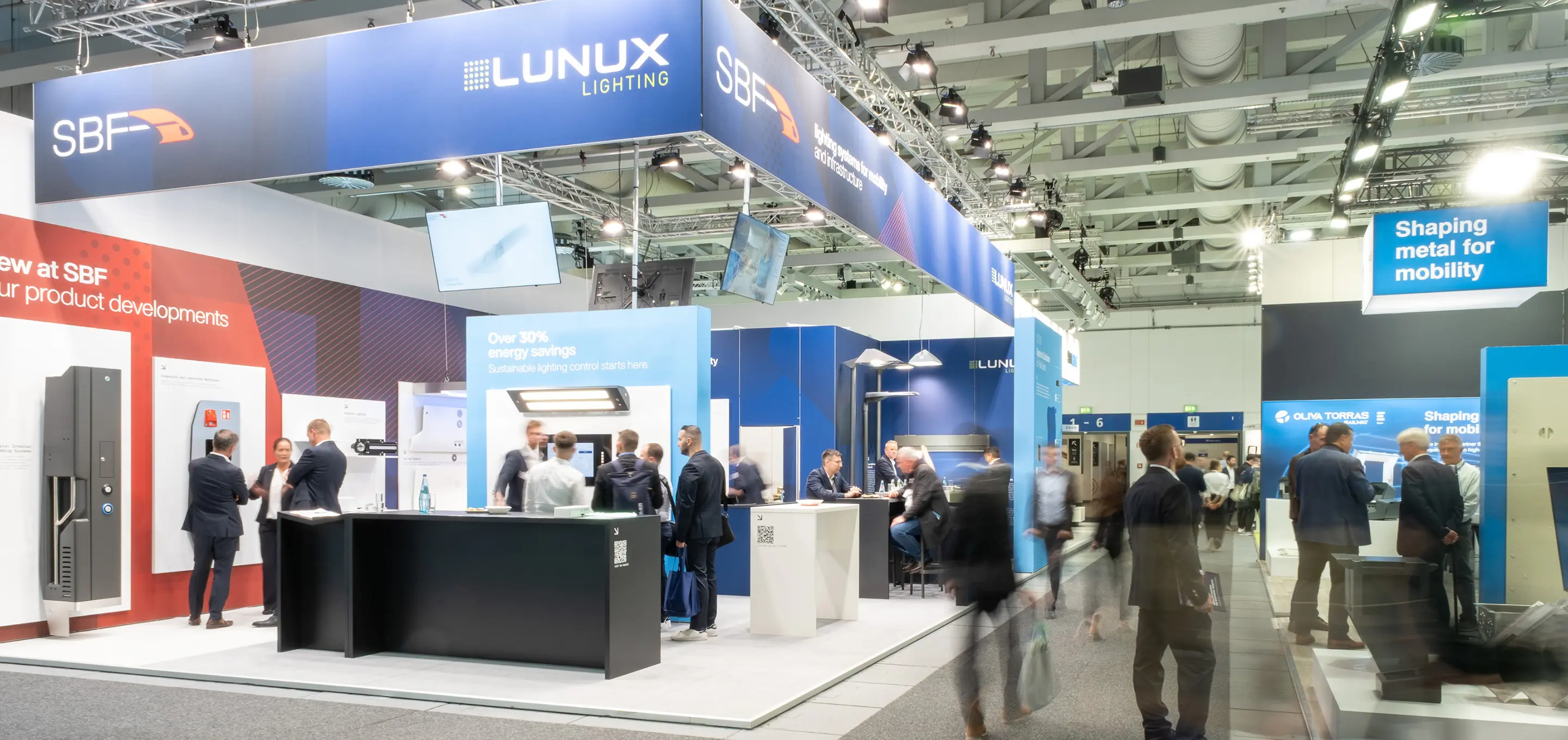
From September 22 to 25, 2026, the international rail and transport industry gathered for InnoTrans in Berlin. It was a special edition for the world's leading trade fair for transport technology: 30 years after the first InnoTrans in 1996, the fair celebrated its anniversary while simultaneously reaching new record highs.
Around 175,000 trade visitors from more than 120 countries came to Berlin. 3,190 exhibitors from 59 countries presented their products, technologies, and developments across 42 halls and the outdoor display area. SBF, together with LUNUX, was once again represented at InnoTrans. Our exhibition presence focused on solutions for lighting, passenger interiors, and integrated assemblies—and the question of how diverse technical requirements can be transformed into coordinated system solutions for rail vehicles.
When the first InnoTrans took place in Berlin in 1996, the current scale of the event was barely foreseeable. Three decades later, the fair is one of the most important international meeting places for the mobility and rail industry.
The 2026 anniversary edition underscored this development: in addition to the 3,190 exhibitors and approximately 175,000 trade visitors, 113 vehicles were presented in the outdoor area. A total of 180 world premieres showcased the technological breadth of the industry. The focus was not just on individual vehicles or products. Topics such as artificial intelligence, digitalization, automation, and new drive technologies demonstrate the comprehensive evolution of mobility, infrastructure, and vehicle technology.
InnoTrans remains more than just a product showcase; it is, above all, a venue for technical exchange, new developments, and collaborative discussion regarding future requirements for rail transport.
The scope of InnoTrans ranges from vehicle technology and infrastructure to passenger interiors, digital applications, and maintenance. It is precisely this connection of different disciplines that makes it clear how complex modern rail vehicles and their associated systems have become.
New technologies must be capable of being integrated into existing vehicle architectures. Mechanical, electrical, and digital components are increasingly becoming intertwined. At the same time, requirements for reliability, maintainability, energy efficiency, variety, and long-term availability remain. For manufacturers and suppliers, this means viewing solutions more within the context of the entire vehicle. It is not just the individual component that determines the technical quality of a solution, but also its integration, its interfaces, and its interaction with adjacent systems.
This development was also a key focus of our exhibition presence at InnoTrans 2026. SBF has been developing and manufacturing solutions for various areas of rail vehicles for many years. The focus is increasingly on combining individual functions and components into coordinated assemblies and systems.
One example is complex interior cladding systems. Structural and cladding elements can be combined with lighting, control elements, sensors, and electrical components within a ready-to-install assembly. Grab rails and partition walls are also evolving beyond their traditional functions. Lighting and other technical features can be integrated directly into the components and adapted to the specific installation situation.
Flexible lighting solutions, in turn, make it possible to precisely tailor light to geometry, installation space, and the desired lighting effect. This turns lighting into an integral part of the vehicle interior rather than an afterthought.
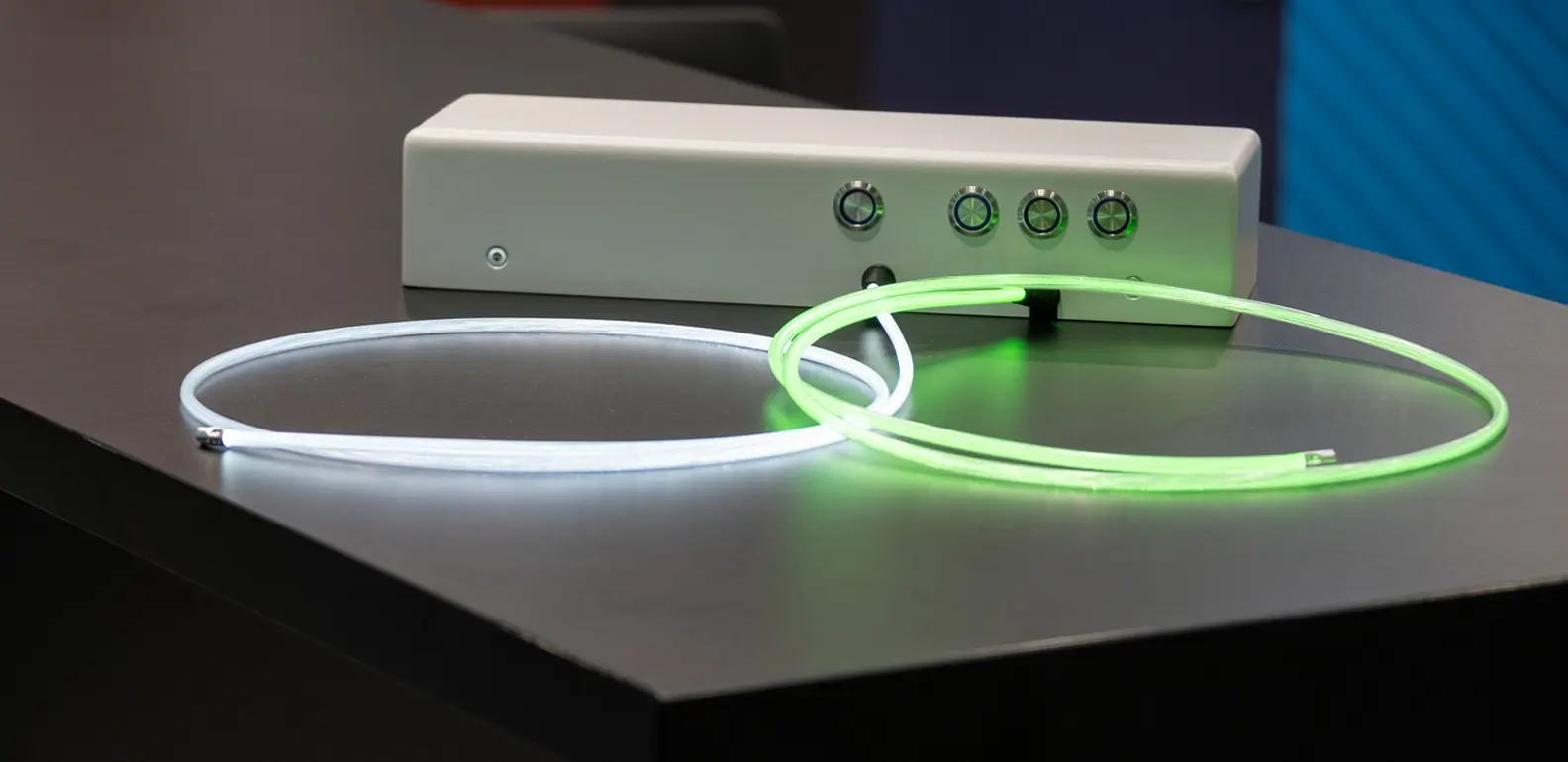
The common denominator of these applications is system integration: mechanical, electrical, and functional requirements must be considered together from the very beginning of the development process.
Customized solutions in rail vehicle construction are rarely created from an existing standard product alone. Vehicle platforms, installation space, geometry, interfaces, and technical functions differ from project to project. The starting point is therefore the specific task at hand.
At SBF, this approach combines project management, development, and design with the necessary manufacturing and integration processes. This allows requirements to be evaluated early in terms of technical feasibility, production, and subsequent assembly. At InnoTrans, this approach was made visible through various product and system solutions—from lighting systems and passenger interior components to complex assemblies.
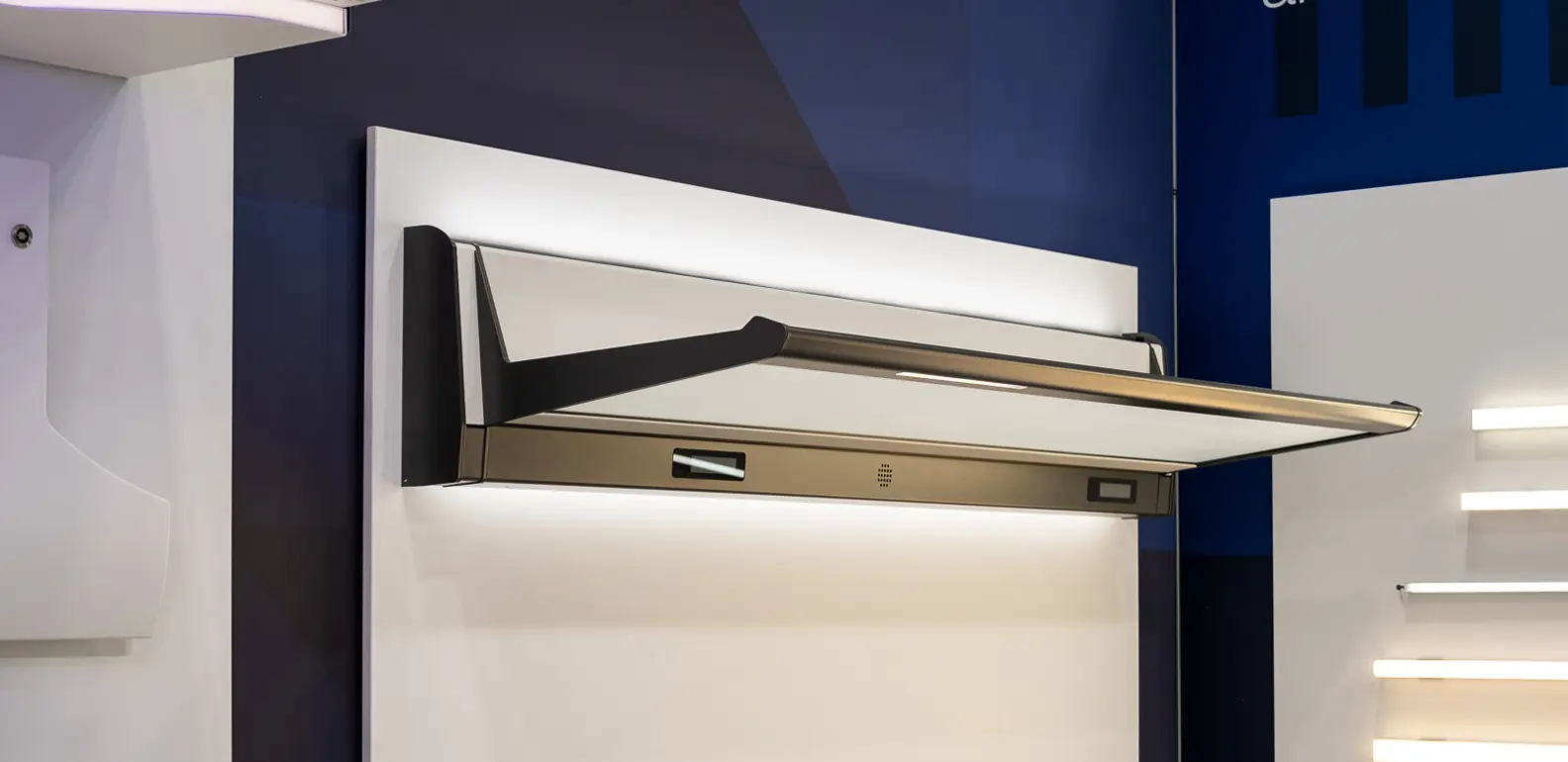
A concrete example was the luggage racks and interior paneling for the FLIRT Nordic Express from Norske tog. Such projects show how vehicle-specific requirements lead to solutions where design, function, interfaces, and installation conditions must be considered together.
The development of complex system solutions is closely linked to the question of how they can be manufactured and assembled later on. Design, mechanical processing, welding technology, electrical processing, and final assembly all influence one another. If these areas are coordinated early on, interfaces can be reduced and changes within a project can be assessed more quickly.
A high level of in-house value creation supports short coordination paths and direct process control. At the same time, it increases flexibility for customer-specific requirements and varying production volumes. We examine the specific significance of vertical integration in rail vehicle construction in more detail in our article "Vertical Integration for Suppliers in Rail Vehicle Construction."

In addition to new developments, dealing with existing vehicles and systems remains an important topic. Many rail vehicles remain in service for decades. During this time, technical requirements change, components are discontinued, or original solutions are no longer available.
Refurbishment and replacement solutions therefore bridge the gap between existing vehicle architectures and new technical possibilities. Components that are no longer available can be replaced, lighting systems modernized, and existing designs adapted to current requirements. The key is to take existing interfaces, installation spaces, and design concepts into account. Modernization therefore does not necessarily mean completely replacing an existing system, but rather developing it further in a technically sensible way.
Beyond products and technologies, direct exchange is one of the most important functions of a trade fair like InnoTrans. In rail vehicle construction in particular, solutions are often created over long project durations and in close coordination between vehicle manufacturers, suppliers, development partners, and operators.
The discussions at InnoTrans 2026 therefore did not just revolve around individual products. The focus was on concrete requirements, ongoing projects, technical issues, and potential new developments. This personal exchange remains important even in increasingly digitized development and manufacturing processes. Complex technical relationships can often be discussed best together at the component, the system, or based on a specific application.
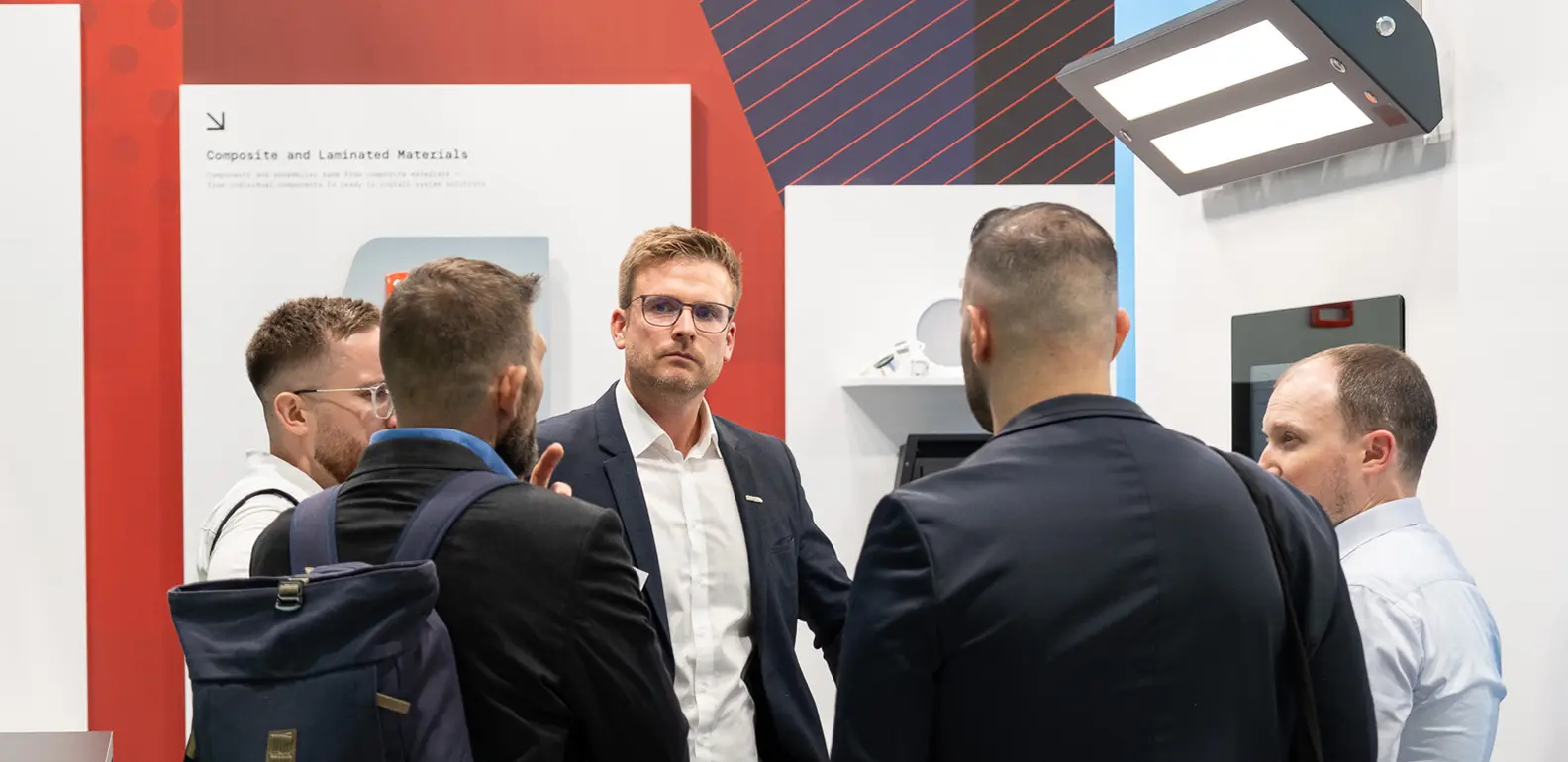
For us, these conversations were therefore an essential part of the four days at the trade fair in Berlin.
The anniversary edition of InnoTrans has once again demonstrated the dynamic pace at which the international rail and mobility industry is evolving. Digitalization, automation, new drive technologies, and numerous world premieres made the technological shift visible. At the same time, it also became clear in the vehicle interior that technical systems are becoming increasingly interconnected.
For suppliers, this development means increasingly viewing individual components in the context of the entire vehicle. Development, manufacturing, and integration expertise must work closely together.
For SBF, too, InnoTrans 2026 was more than just a presentation of existing products. The four days of the fair provided the opportunity to discuss specific requirements, showcase developments, and talk with customers and partners about future solutions for rail vehicle construction.
After four intensive days at the fair, this exchange now continues within our projects—and we are already looking ahead to the next InnoTrans in 2028.

Stay up to date: Follow us on LinkedIn and YouTube for the latest information, insights, and practical videos.